|
| The Register of Deaths at The Washington State Archives |
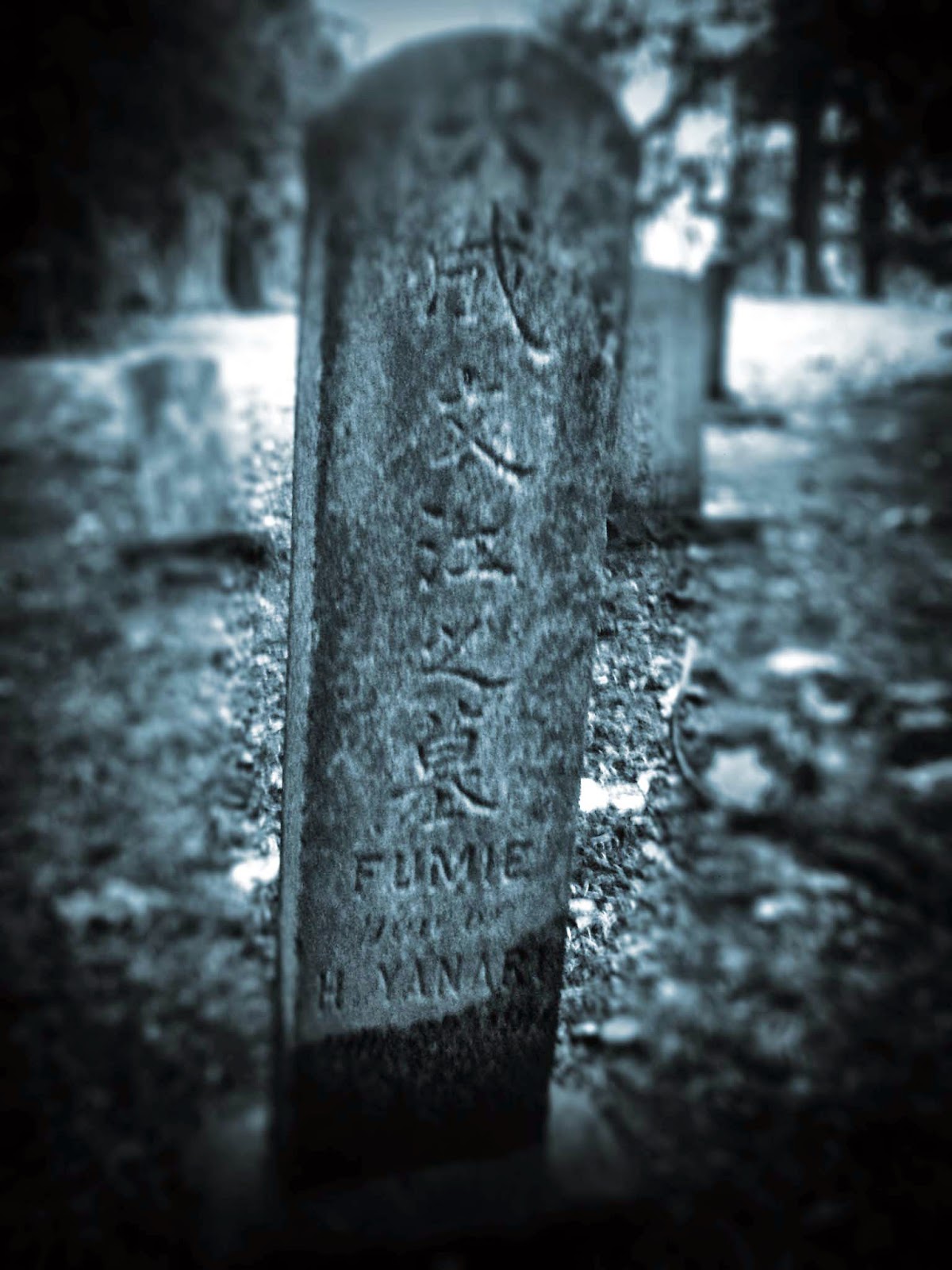
As a follow-up to our Bayview Cemetery excursion, Marissa McGrath from the Bureau of Historical Investigation suggested that we schedule a visit to the The Washington State Archives at 25th Street and Bill McDonald Parkway. Our intentions were twofold: to introduce me to the rudiments of the collection and to uncover some history of the names we found on the gravestones at Bayview.
 |
| City Directories for Bellingham at at The Washington State Archives |
After leaving our packs and bookbags at the front (you can bring in unbound sheets of paper, cell phones and laptops), we were led into a well-lit research room. There is a shelf of City Directories going back to 1900. Many other basic reference volumes. Also a computer terminal and a Microfiche reader.
The informative website for the Archive states:
Local government records include those from county offices such as the Auditor, the Clerk, the Treasurer, the Board of Commissioners, and from municipalities, school districts, and other service districts. Only a small percentage of the records created by these offices are transferred to the State Archives as archival records. They are selected as archival for their value as legal and historical evidence of policy development, implementation, and effect. The transfer of records to the State Archives is an ongoing process. Some historical records remain with their originating office pending future transfer to the Archives.
Although the Archives does not hold all the records for the entire span of Washington's history from the various county and city offices in the region, it does hold extensive series of some records from all seven counties, with more complete representation in Whatcom, Skagit, and Snohomish counties. These series include:
Birth and death records from January, 1891 to July, 1907
Marriage records
Court records including naturalization records, court dockets, and civil, criminal, and probate case files
Land records including general indices to recordings, deeds, and patents
County commissioner's proceedings, ordinances, and resolutions
Real and personal property tax records
School district and Educational Service District records including school censuses.
 |
| Oregon and Washington Gazetteers - The Washington State Archives |
Since we were researching names on gravestones at Bayview, we asked to see the earliest Death Records for Bellingham and Whatcom County. We also retrieved several volumes of Bellingham City Directories from the shelf. What I immediately realized is that I could spend hours and hours here just looking at the covers and advertisements. They are rich with their own history and offer a fascinating window into the interests and businesses of early 20th century Bellingham.
 |
| Cover of the 1904 City Directory Morse Hardware Co. - Importers and Jobbers The Washington State Archives |
 |
| Interior Cover of the 1904 Bellingham City Directory Cannery Dealers The Washington State Archives |
 |
| Front Cover of Bellingham City Directory The Washington State Archives |
 |
| Diehl & Simpson - Corner of Dock and Champion Streets Ford Supplies and Sundries Always at Hand The Washington State Archives |
 |
| Standard Auto Co. - 1215 Dock Street Overland Automobiles The Washington State Archives |
 |
| Cole's Popcorn - "Here to Stay" The Washington State Archives |
 |
| Sanitarium Baths - Hotel Leopold Electric Baths and Vibratory Massages The Washington State Archives |
 |
| Printer's Ephemera - City of Bellingham Directory The Washington State Archives |
 |
| F. L. Dames - Died 1905 Bayview Cemetery |
The first grave Marissa showed me the other day at Bayview Cemetery was for Corp.'l F. L. Dames, who was notoriously murdered in his butcher shop in 1905 by a man from Maple Falls.
We open up the oversized Register of Death and, in an charming approximation of the Palmer method of handwriting that everyone in the 19th century seemed trained in, we indeed find entry #1069 for Dames, F. L.. His address is listed at 1017 Elk St. - which is now North State Street and home to the wonderful Redlight Bar. Under cause of death, is the single word: "Murdered". And, to me, there appears just a hint of disturbance in the writing, a subtle remark on the brutal nature of the act.
The next name on a grave that we are researching is that of Nicholas Caufman, whose remarkable gravestone designates him as a member of the Woodmen of the World.
In the Bellingham City Directory for 1906, there is indeed an entry for Nicholas Caufman. He was a "filer" who worked at Miller Brothers. His address indicates he owned a home at 1534 Grant.
We open up the oversized Register of Death and, in an charming approximation of the Palmer method of handwriting that everyone in the 19th century seemed trained in, we indeed find entry #1069 for Dames, F. L.. His address is listed at 1017 Elk St. - which is now North State Street and home to the wonderful Redlight Bar. Under cause of death, is the single word: "Murdered". And, to me, there appears just a hint of disturbance in the writing, a subtle remark on the brutal nature of the act.
 |
| Register of Death for Bellingham, WA F. L. Dames - Died 1905 The Washington State Archives |
 |
| Register of Death for Bellingham, WA F. L. Dames - Died 1905 1017 Elk Street The Washington State Archives |
 |
| Register of Death for Bellingham, WA F. L. Dames - Died 1905 "Murdered" The Washington State Archives |
The next name on a grave that we are researching is that of Nicholas Caufman, whose remarkable gravestone designates him as a member of the Woodmen of the World.
 |
| Nicolas Caufman - Died 1906 Woodmen of the World Bayview Cemetery |
 |
| Bellingham City Directory 1906 Entry for Nicholas Caufman Occupation: Filer at Miller Brothers The Washington State Archives |
In the Bellingham City Directory for 1906, there is indeed an entry for Nicholas Caufman. He was a "filer" who worked at Miller Brothers. His address indicates he owned a home at 1534 Grant.
Marissa points out to me that while many of the men were listed under a wide variety of occupations, the women were most often listed as housewife. In the Directory of local poet and writer Ella Higginson, who died in 1940, her occupation is listed as "widow" - as her late husband's business concerns defined her more than her own well lauded profession.
 |
| Bellingham Register of Deaths Entry for Nicholas Caufman The Washington State Archives |
 |
| Bellingham Register of Deaths Entry for Nicholas Caufman Cause of Death: Tuberculous Spondylitis The Washington State Archives |
Moving back to the Register of Deaths, Nicholas Caufman is found under entry #1213. His cause of death is listed as "Tub. Spondylitis" - Tuberculous Spondylitis. According to Wikipedia, it is also known as Pott's disease and is a form of extra-pulmonary tuberculosis that affects the spine.
The Causes of Deaths column is fascinating. I want to compile a database of all of the causes of death in the early 1900s in Bellingham, along with explanations of some of the more arcane and obsolete medical terms. The cause of death offers a surprising amount of "unspoken" or euphemistic information. Such as the Chinese "laborer" who died of "ruptured hernia" - meaning he essentially worked himself to death. Or Oda Burton, who lived at 1121 B - which Marissa informs me was a neighborhood of brothels. She is listed as "single". Occupation: "servant". Cause of death was a "Gunshot Wound". Reading between the lines, it was highly likely that Oda Burton was a prostitute.
 |
| City of Bellingham Register of Deaths Women's vs. Men's Occupations The Washington State Archives |
 |
| Register of Deaths Flora Blakely - Died 1892 The Washington State Archives |
 |
| Flora Blakely - Died 1892 Cause of Death: Brain Disease The Washington State Archives |
Marissa finds an entry for Flora Blakely. Died in Fairhaven on March 15, 1892. Cause of death: "Brain Disease". She asks me if know about "The Lady in Green". Unfortunately, I do not recognize the name - which is why it is great to be at the archive with an informed guide and local historian. So she fills me in (this is from a Good Times Girl Historical Tour of Fairhaven):
Town Marshall Joseph A. Blakely and wife Flora Blakely owned one quarter of the Mason Block (now Sycamore Square) and lived in an apartment on the 4th floor. Flora had given birth to two children: A girl, Kay, and a boy, Roy. Kay died at the age of 10 in Brownsville, Oregon in 1890, the same year that the Blakely's moved from Brownsville to Fairhaven. Flora's sister, Retta, had suffered from "insanity" and died in 1888 at age 26 in an Oregon institution. In 1892, Flora died in the Mason building.... Of a "brain disease."
In a time when our city newspapers would devote full columns to the death of any person of the slightest merit or with even the hint of a tragedy, the newspaper ran a single obituary article for the 33-year-old mother of a 9-year-old boy and wife of the Town Marshall. The obituary stated that she was overcome with a sudden illness and died at home. The coroner report lists her cause of death as a "disease of the brain," and said that her illness lasted a week before she died but cites no attending physician in an era when house calls were common and in a full page of death records where all other deceased entries had attending physicians listed.
Interestingly: When psychics were brought into the Mason Block in the last few years to investigate some of the strange goings-on, two different psychics independently picked up on a woman in green that they said lived in the building at the turn of the century who had died by falling or jumping from the 4th floor balcony.
We wonder: Was she depressed over her daughter's death? Was she crazy? Did she throw herself from the balcony? If Flora had killed herself, we think it highly unlikely that the newspapers would have printed such a story about the Town Marshall's wife. A "disease of the brain" could easily be interpreted as "mental illness." There was also major social stigma around mental illness at the time, and having a wife with a mental illness would have been an "embarrassment," so... Was she pushed? Perhaps even by her husband? In any case, Joseph remarried and had two more children while son Roy was sent to live with his maternal grandparents in Oregon. Joseph had more children and enjoyed successful career as sheriff of Pendleton, Oregon.
 |
| Mason Block (Sycamore Square) Photo Source |
 |
| Register of Deaths Cerebral Softening The Washington State Archives |
 |
| Register of Deaths Suicide by Shooting The Washington State Archives |
 |
| Register of Deaths Suicide by Dynamite The Washington State Archives |
I could've (and probably will) spent hours and hours at the Archive. We didn't even get to any court records or county proceedings. The amount of information is staggering. Just as an example, as we were leaving, I noticed a couple of bound volumes of the Bellingham Herald from 1910 and 1911. Just casually browsing the pages turned up some sweet little gems:
 |
| Bellingham Herald - 1910 Whirling Spray The Washington State Archive |
An advertisement for Marvel Whirling Spray:
"Every woman is interested and should know about the wonderful MARVEL Whirling Spray. The new Vaginal Syringe. Best - most convenient. It cleanses instantly. Ask your druggist for it. If he cannot supply the MARVEL, accept no other, but send stamp for illustrated book - sealed. It gives full particulars and directions invaluable to ladies."
 |
| Bellingham Herald - 1910 The Machine With the Human Brain The Washington State Archive |
And this beauty for the Remington Adding and Subtracting Typewriter:
"The Machine with the Human Brain" which claims: "This machine not only writes but thinks. It does what a man can do only by thinking - and more. It writes and adds simultaneously, whereas one thing at a time is all that the average brain can do. Again, it automatically detects errors of operation. No man ever had a brain that would do that - automatically."
Washington State Archives
Northwest Regional Branch
Western Washington University, MS-9123
Bellingham, WA 98225-9123
(360) 650-3125
NWBranchArchives@sos.wa.gov
The Northwest Regional Branch is located on the southern edge of the Western Washington University campus at the corner of 25th Street and Bill McDonald Parkway.